
IEPI BLOG – Data for all: Towards ethical data sharing to support infectious disease research
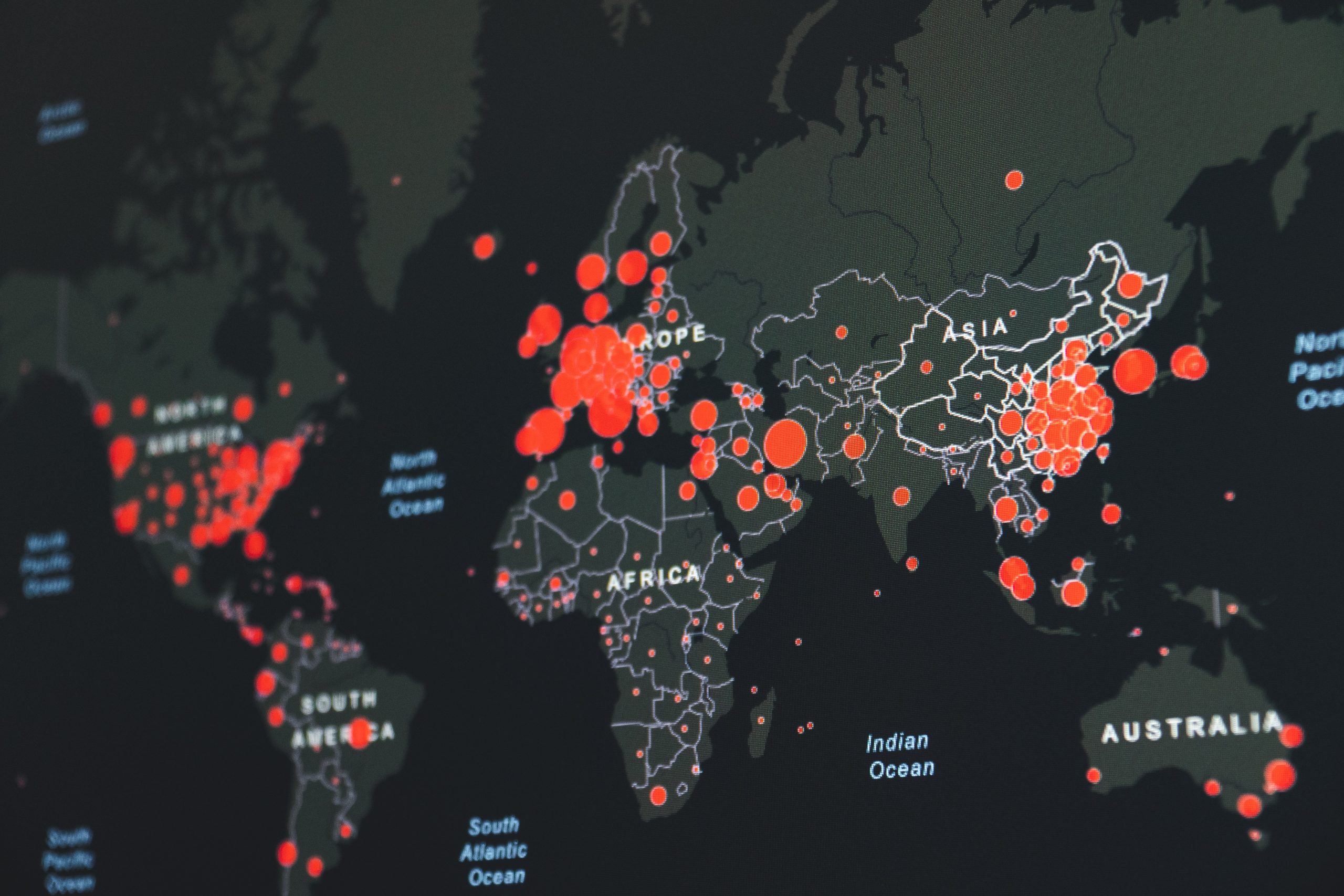
Data is an essential driver for social and economic development. Whether generating new knowledge, pursuing innovation, or improving health outcomes, the ability to collect, analyze, and share data is crucial.
The emergence of a new pathogen such as SARS-CoV-2 makes data sharing across borders all the more urgent. However, this comes with many ethical, legal, and technical challenges.
“Data ethics and governance are crucially important, and especially so in the global health space,” says Dr. Claudia Emerson, Director of the Institute on Ethics & Policy for Innovation (IEPI) at McMaster University. “Whether you work in HIV, maternal health, or family planning, chances are you’ll encounter a data sharing issue.”
A world-leading research and training institute in global health ethics and policy, IEPI focuses on several key pillars of research, including data ethics and governance. “I’ve long been interested in how we manage data for the public good,” says Emerson. “Ethical data sharing involves the ethical collection, storage, access, use, disclosure, and disposal of data — that is, the entire lifespan of data.”
A new model for epidemic response
How to reconcile scientific and public health data across multiple institutions, platforms, data types, providers, and users?
IEPI is a member of ReCoDID (Reconciliation of Cohort Data in Infectious Diseases), a network of multidisciplinary research teams across four continents. Coordinated by Heidelberg University Hospital in Germany, ReCoDID was launched in 2019 to fast track and improve the research response to viruses and other pathogens, by facilitating data sharing among infectious disease cohort studies.
The four-year project is supported by the European Commission under the Horizon 2020 Programme and the Canadian Institutes of Health Research Institute of Genetics (CIHR-IG).
ReCoDID originated in response to challenges researchers were facing when trying to combine large datasets across three EU-funded Zika cohort studies. In 2020, the project expanded to focus on COVID-19, along with arbovirus diseases (viruses such as encephalitis, dengue, and yellow fever that are transmitted by mosquitoes, ticks, or other arthropods).
Building on existing infrastructures and partnerships, ReCoDID seeks to create a sustainable model for the storage, curation, and analysis of complex data sets collected by infectious disease cohorts around the world. One of the innovative aspects of ReCoDID is that it aims to link clinical epidemiological data and high dimensional laboratory (OMICS) data, filling an important gap in the scientific community. The goal is to create a new model for collaborative research in epidemic response — one that is participatory, equitable, effective, and transparent.
The PEARL of the plan
Through application of FAIR (findable, accessible, interoperable, and reusable) data principles, ReCoDID seeks to expand and integrate data collection, curation, and storage, both to improve quality and standardization and to strengthen collaboration across countries. It aims to leverage and improve existing IT infrastructure and create computational tools to democratize data access and connect data providers with the scientific community — ultimately, to ensure that populations in low- and middle-income countries (LMICs) benefit from the personalized medicine revolution.
To achieve these goals, it’s essential to analyze the political, ethical, administrative, regulatory, and legal (PEARL) issues related to data sharing.
IEPI leads the ReCoDID work on identifying and addressing PEARL barriers and solutions. Access to high-quality data, as well as the infrastructure to analyze that data, are essential factors in advancing global health and responding to infectious disease outbreaks. PEARL issues can significantly hinder data access and flow, with a particular risk for LMICs.
The goal of IEPI’s work in this space is to protect the interests of data subjects, while also implementing collaborative and transparent processes that ensure LMICs can participate in and benefit from ReCoDID’s work.
Piecing together the puzzle
IEPI also plays a lead role in the development of ReCoDID’s Data Governance Framework. That’s a high-level normative and technical document which sets down the rules for data privacy and protection, guides the lawfulness of data processing within the platform, and ensures compliance with various data protection legislations.
“You can have datasets ready to be shared, but you must first have the regulatory and legal structures in place to allow data sharing,” says Priscilla M.D.G. César, a postdoctoral fellow with IEPI and lead contributor to ReCoDID’s data governance framework.
A lawyer, policy advisor, and researcher with experience in Brazil and Canada, César specializes in intellectual property, international law, data protection and privacy, and global health. She joined IEPI in January 2021 to be part of its diverse, multidisciplinary team and to collaborate with its partners at the intersection of ethics, global health, law, innovation, and public policy.
César explains that ReCoDID’s Data Governance Framework establishes processes that allow its platform to function in a collaborative, transparent, and equitable fashion, to ensure the participation of LMICs. While ReCoDID’s goal is collaboration across the board, “we also consider how to share the benefits with LMICS, as most infectious disease data are collected in these countries,” says César.
The framework also determines feedback mechanisms to safeguard the rights and needs of data subjects (research participants and patients) and providers (research institutions) and promote their participation in the network. “The project brings up several ethical questions,” says César. “For example, how do we go beyond authorship discussions to address elements such as attribution, contribution, and collaboration of data providers into scientific enterprise? Also how do we fairly recognize the contribution of data subjects, while protecting their personal data and privacy, guaranteeing their rights, and promoting fair benefit sharing, especially in LMICs?”
Ensuring ethical data sharing across borders is a complex task involving research teams, institutions, government bureaucracies, and funders across the many countries that contribute to ReCoDID. It also requires coordinating ReCoDID’s legal and regulatory requirements while considering public interest, and enabling the project’s technical and IT specialists to harmonize vastly different types of datasets.
According to César, these are some of the ‘behind-the-scenes’ aspects of advancing global health outcomes. “It’s a puzzle,” she says. “And it’s a huge team effort to develop and launch ReCoDID as no individual team has all the necessary pieces.”
Blog, Data Ethics & Governance, Priscilla Cesar